About us
It is easy to imagine that there has been a pub located on this site since the 1700′s. It’s harder to believe that this beautiful collection of historic red brick buildings was once valued at five shillings.
We bought the pub (for a little more that this, it has to be said), then known as the Red Lion Brill, from Greene King, back in May 2011. After a really successful autumn and winter we decided to close for a refurbishment in January 2012 and are now thrilled to open our doors once more.
As we’ve been living in the local area for well over a decade, we are not newcomers to Brill or the vibrant village community that it represents. That’s why our vision for the Pointer has always been for it to get back to being a real village pub.
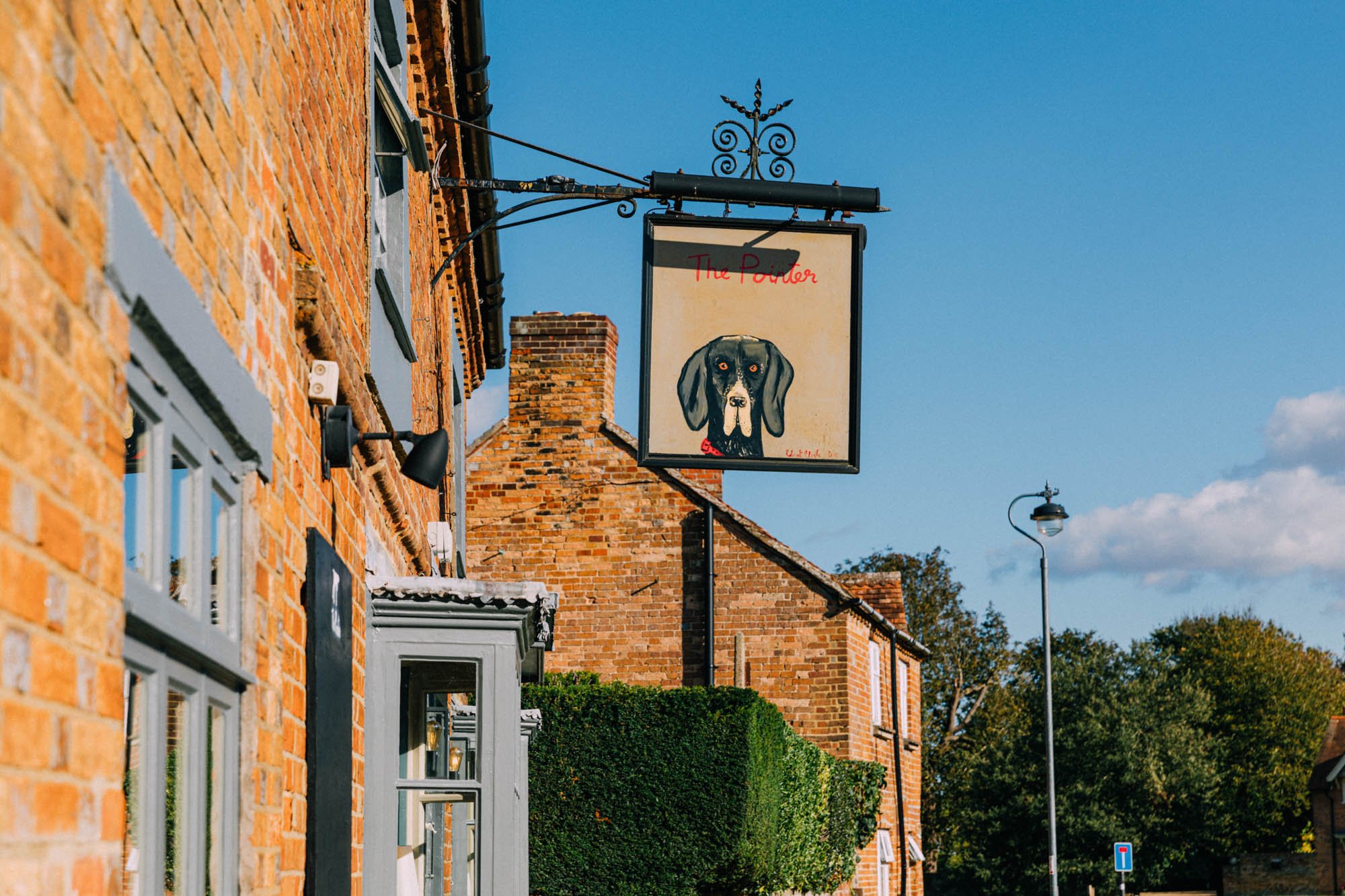
The Buckinghamshire County Archives show that ale was first sold on the premises in the early 16th century by the Cubbidge family and that it was they who probably named the establishment The Pointer. In 1731 the land again exchanged hands, going to the Hunt family whereupon in 1746 it appeared again, this time referred to as ‘The Red Lion, formerly The Pointer’. This was no doubt following the imposition of King James that all public buildings should bear his arms. We decided it was time to change it back to the old village name.
The Pointer is located within the medieval manor and post-medieval town of Brill in Buckinghamshire. According to the Cartulary Manuscript of Aylesbury, there was probably a building of some sort on this site as early as 1200 AD. Originally a ‘burgage plot’ – an encroachment and settlement on common land – this was probably the location of the forge in Brill in 1205, the same forge referred to in the first extant deed relating to the property which is dated 17 april 1578.
Thanks to our fantastic team the restoration work has gone really well. It has been a journey back through time in many ways – rescuing ancient walls and old stonework has been both a challenge and a pleasure as we begin to see this amazing set of buildings restored to its former glory, some of which date back to the days of Agincourt.
The outbuildings – what is now the Butchers and Shop – have been taken down and re-built quite literally brick by brick…working closely with Historic Buildings, it’s been quite a feat of engineering, determination and plain hard graft.
Brill is also known for its windmill, last owned and used by the Pointer and Nixie family who also baked bread in their house in the village. With timbers dating from 1685, Brill Windmill provides one of the earliest and best preserved examples of a post mill (the earliest type of European windmill) in the UK.
Brill’s name is a combination of Brythonic and Anglo Saxon words for ‘hill’ (Brythonic breg and Anglo Saxon hyll). In the reign of Edward the Confessor, who visited Brill to enjoy the hunting in Bernwood Forest, it was a town called Bruhella. In 1086 Brill was assessed for 20 hides in Domesday with a population of 19 villans (villagers), 13 bordars (small holders) and 2 slaves. There was a small mill worth 10 shillings, meadow for 20 ploughs, and woodland for 200 pigs.
Edward 1 was resident at Brill Manor, where he signed 6 writs in 1277. The manor remained in Royal hands until 1337 and in 1340 had been granted to John de Moleyns. During the Civil War Brill was briefly garrisoned by Parliament during the winter of 1644.
The Church of England Church of All Saints was built early in the 12th century, and its nave and chancel remain essentially Norman structures. In 1888 All Saints’ was largely rebuilt under the direction of John Oldritt Scott.
The perpetrators of the Great Train Robbery in 1963 hid at the remote Leatherslade Farm on the boundary with the village of Oakley. The gang assembled at Leatherslade (then unoccupied and leased by the robbers), two days before the actual crime, which occurred near Cheddington, almost 20 miles to the east of Brill. And it was to Leatherslade that the gang immediately returned to divide the loot.
It has been said that J.R.R Tolkien based the village of Bree in The Lord of the Rings on Brill. He used other nearby places in Oxfordshire as part of the ‘Shire’, sometimes using the same names, such as Buckland.
So if you see any hobbits propping up the bar, you’ll know why.


Like us on Facebook
Leave us a Review